Free
Customers
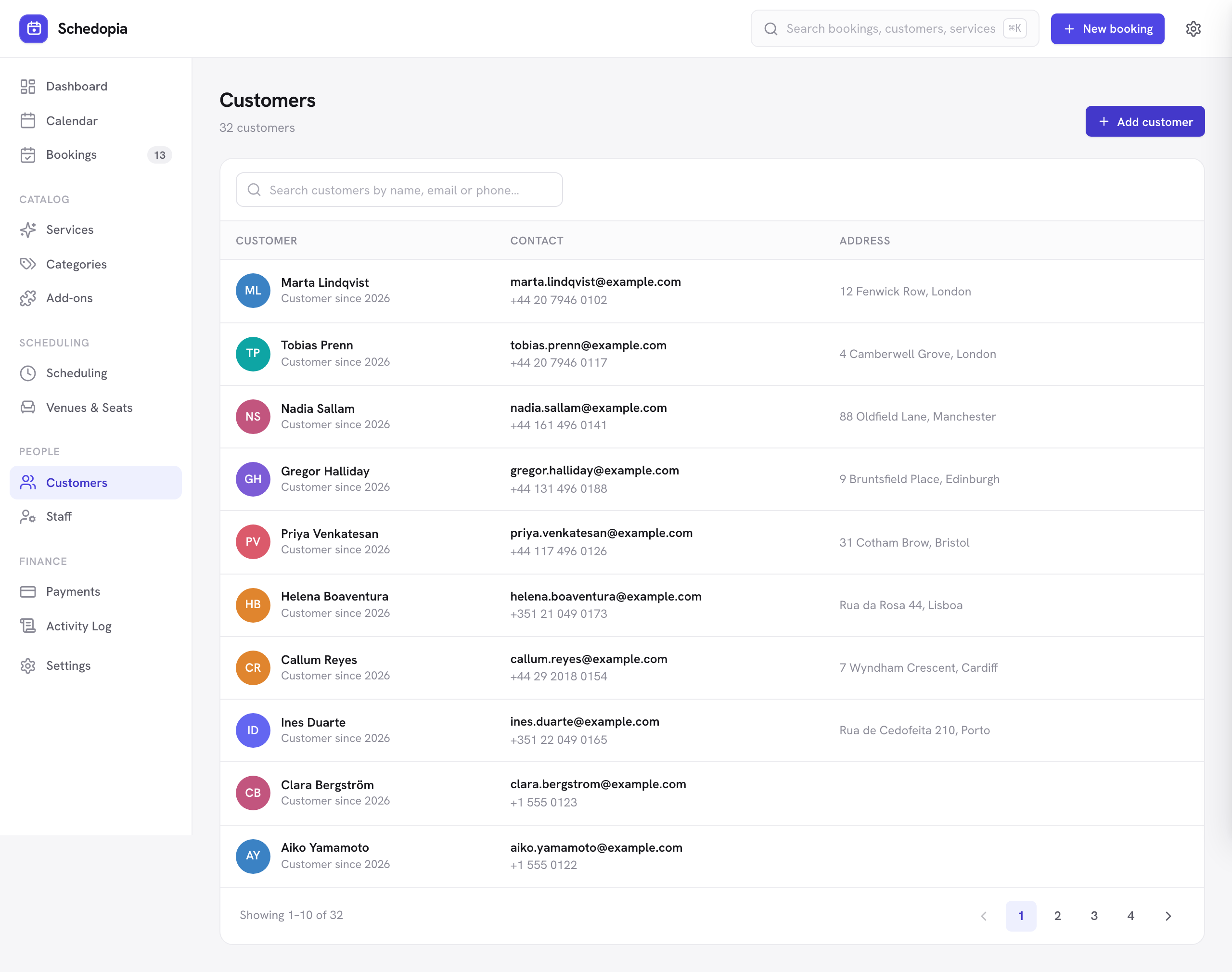
Every booking belongs to a customer record. Schedopia builds this list for you as bookings come in, so it stays accurate without any data entry.
How customers are created
When someone books through the public form, Schedopia looks for an existing customer with that email address. If it finds one, the booking is attached to them; if not, a new customer is created. That means a returning customer accumulates a history rather than appearing several times.
You can also add customers yourself — either from this screen, or inline with New customer while creating a booking.
Matching is by email address. A customer who books once as sam@example.com and later as samantha@example.com will appear as two records — merge them by updating one and moving the bookings across.
What is stored
Name, email address, phone number and optionally an address — the details the booking form collects, and nothing more. Schedopia does not track behaviour or build a profile.
Booking history
Open a customer to see every appointment they have ever had, in any status. It is the quickest way to answer “when was she last in?” or “has he cancelled before?” before you pick up the phone.
Editing and deleting
Editing a customer updates their details everywhere, including on existing bookings — so correcting a mistyped email fixes it for future notifications too.
Deleting a customer removes them from this list. Their past bookings are kept so your history and revenue figures stay intact.
If a customer asks you to erase their data, deleting the customer record removes their contact details. Note that this is your obligation to fulfil as the site owner — Schedopia stores everything on your own server and sends it nowhere else.